

What Are The Six Characteristics That Typify A Blog?
About 65% of innovations are sourced through external suppliers and partners (ISM). Put into simple math… Good supplier performance = Good supply chain performance.
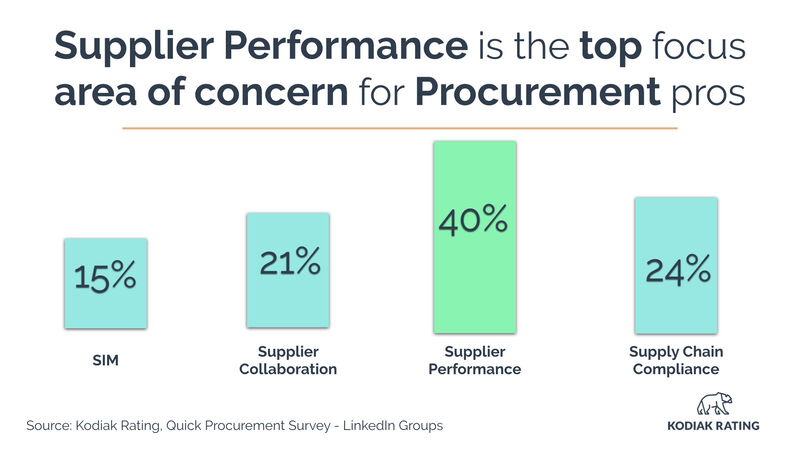
About 65% of innovations are sourced through external suppliers and partners (ISM). This makes supplier and partner contributions to a supply chain's production and profitability rather pivotal. Put into simple math… Good supplier performance = Good supply chain performance. Supplier Performance Management (SPM), when done right, can help your procurement organization to harness supplier performance and innovation to positively impact your business' top-line value creation. SPM is an area that can be challenging for global procurement teams, as supply chain complexity continues to grow. Unfortunately for many procurement teams, gaining basic buyer insights, from their supplier base, such as contract, spend, performance, risk, and compliance data isn't so easy to get a hold of, or begin to analyze. Even in the most mature of procurement organizations evaluating and managing a supplier base's performance can be difficult. Kodiak Hub surveyed 526 Procurement and SupplyChain professionals on Linkedin asking what focus in Supplier Management is their biggest area of concern? As seen in the graphic below 40% of respondents listed Supplier Performance as their top area of concern. At the same time, nearly half of procurement professionals who responded in the 2021 Supply Chain Resilience Report by BCI (seen in the graphic below) said that they don't harness any kind of technology to follow up on Supplier Performance KPIs. Procurement professionals are concerned with addressing supplier performance management and understand the value it brings to their overall excellence, but almost 50% of teams don't actually follow up on Supplier KPIs. Maybe this stems from a lack of time, overly complex supply chains, or a simple lack of resources. No matter the reason, one harsh truth remains; you can't manage what you can't measure. If you're still reading this article it means we've made it this far in the article together. That means that the above statistics may resonate with you. No need to worry. We're not going to utilize this article as an opportunity to reprimand or scold you for a lack of SPM. Quite the contrary. You likely know the importance and benefits of Supplier Performance Management. But, maybe you've gotten discouraged along the way, or don't know where to start. We will use this opportunity to inspire you to get back up on the horse and give you some tips as to how you can get started with supplier performance management. Change can be overwhelming. Sometimes, that feeling can become the barrier to jumpstart change at all. But, in order to apply supplier performance management tools and adopt a framework that will make an impact in your organization, change is inevitable. That's why our team at Kodiak Hub has laid out these tips below on how to get started. Kodiak Hub breaks Supplier Performance KPI 'areas' into 6 parameters: Locating these key performance parameters is important to build sub-parameters, and eventually find individual data feeds to structure your performance evaluations properly. See the graphic below to understand how these KPI trees can be built. To achieve a broad range of stakeholder perspectives you'll need to include Production, Quality, Sustainability, Finances, and even Sales & Marketing in order to truly capture the various Supplier KPIs that exist within the broader value chain. This will help you to bridge functional gaps, and gain perspective for the necessity of supplier performance within various functions. This may require a development manager, a program manager, or a project owner to align supplier KPIs, targets & goals cross-functionally. Taking Governance & Risk into consideration will give you a 360º picture of a supplier's overall performance, and it will ensure that your supplier partners won't negatively impact brand or shareholder value. If something happens in the world, you need to know about it. If you have a global, complex, or large supply chain, then Media Monitoring of some sort is suggested, to stay on top of current events, news, happenings, updated sanctions, blacklists, and more. Take the time to locate where your supplier performance data can be sourced from, and it will streamline the process of gathering information. This will save your team time & headaches. Much of performance evaluations are based upon qualitative experiences and evaluations of a supplier's performance. Focus on Quantifying the Qualitative. Create opportunities to make your supplier evaluation criteria into a multiple-choice format. The more you can turn into multiple-choice options, the more you can weigh the questions you ask, and automate the scoring of responses, which will also serve as a time saver. Learn more about the recipe to ensure smooth supplier management here. Until next time!


9 Supplier Performance Management Software Benefits

7 Quick Tips To Get Started With Supplier Performance Management Solutions
Workshop with your team to determine how you'd like to evaluate supplier performance.
Supply Chain, Quality, Commercial, Collaboration, Innovation & Sustainability performance. 
In order to align on KPIs, and have robust criteria for supplier performance evaluation, you need to locate KPIs that are outside of the scope of solely Procurement, Sourcing & Supply Chain.
Supplier performance management & evaluation should be adapted based upon a supplier's characteristics, or a supplier type. It's important to evaluate supplier performance in line w/ supplier typification; this could be based on category, country, spend, criticality, or other typifications.
A supplier that lacks quality management, will likely not excel in quality performance, and should they show high-quality performance, but lack management capability this discrepancy could also cause issues.
We're living in a new reality where the value of a brand is directly linked to & impacted by the operational activities of a global supply chain and its many tiers. Consumers aren't sympathetic to supply chain complexity.
Do you need to send a performance evaluation to an internal stakeholder, or a supplier, or both? Do you need to send a performance evaluation to multiple stakeholders? If so, do all stakeholders need to respond to every area of the evaluation? Most importantly, do you already have the responses to the evaluation in another business solution, such as an ERP, or quality solution?
Supplier Ratings will help you spend less time with your nose in an excel spreadsheet and give you more time to drive value with the right suppliers at the right time.

Kodiak Hub
Put your data-driven insights, ratings & analytics to use. Enable collaboration with the right suppliers at the right time to drive supply chain performance.
See all blogs postsWhat Are The Six Characteristics That Typify A Blog?
Source: https://www.kodiakhub.com/blog/9-benefits-with-supplier-performance-management-software
Posted by: joneshicip1993.blogspot.com
0 Response to "What Are The Six Characteristics That Typify A Blog?"
Post a Comment